Understanding the Two Systems
Concrete Pavers
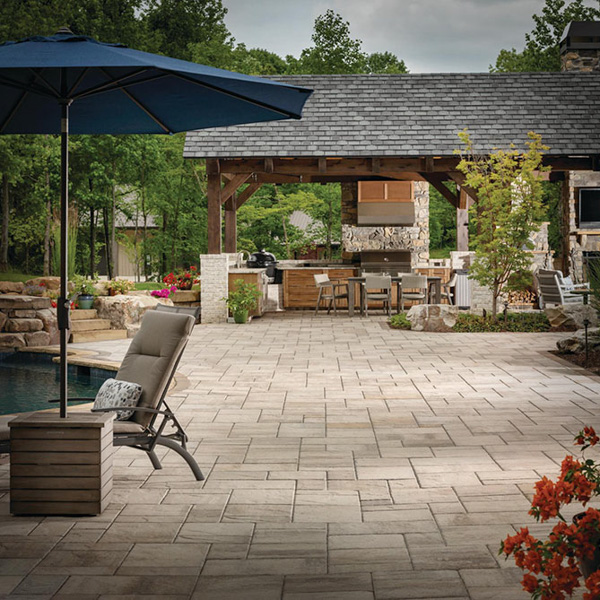
Concrete pavers are individual units installed over a prepared base with sand or bedding material between them. The joints allow small amounts of movement without damaging the surface.
Because pavers are modular, individual units can be replaced if needed without disturbing the entire surface.
Common applications include:
- Driveways
- Walkways
- Patios
- Pool decks
- Entry courts
Stamped Concrete
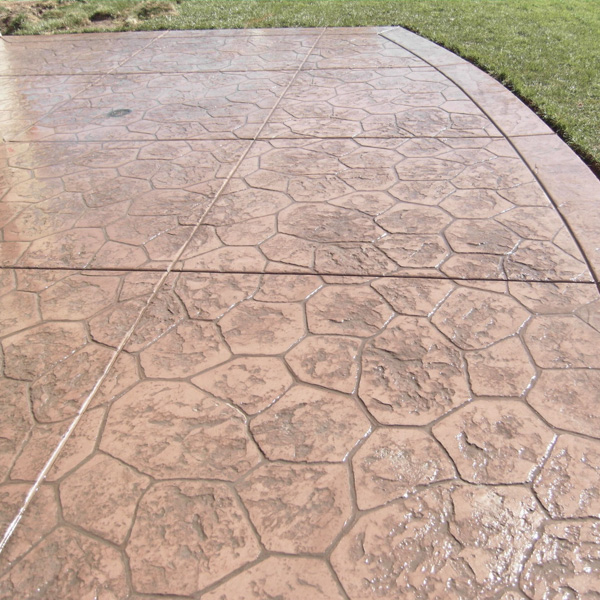
Stamped concrete is a single continuous slab of concrete poured and then textured or patterned to resemble materials such as stone, brick, or tile.
Color is typically added through surface stains or integral pigments, and the texture is created using stamping mats before the concrete fully cures.
Stamped concrete can provide an attractive decorative surface initially, but because it is a continuous slab, it behaves differently over time.
Durability Over Time
The biggest difference between the two systems becomes apparent after several years of use.
Stamped concrete behaves like any concrete slab. As the ground beneath it moves or settles, cracks will inevitably form across the surface.
Control joints are typically installed to guide crack formation, but they cannot eliminate cracking entirely.
Pavers, on the other hand, are designed as flexible paving systems. The joints between units allow small amounts of movement without creating visible fractures across the surface.
Instead of one large slab reacting to soil movement, the surface behaves as if it were many smaller pieces working together.
Repair and Maintenance
Repairability is one of the most significant advantages of pavers.
If a section of pavers settles or becomes damaged, the affected area can usually be lifted, the base corrected, and the pavers reinstalled. Individual units can also be replaced if necessary.
With stamped concrete, repairs are more difficult. Cracks typically require patching, grinding, or resurfacing, and color matching can be challenging. Even when repaired properly, the patched areas are often visible.
Longevity
Longevity is where pavers truly stand out.
Because paver systems are modular and repairable, they can often last for decades when properly installed. In many cases, the surface can be maintained indefinitely by correcting isolated areas as needed.
Stamped concrete surfaces typically have a shorter lifespan before significant repairs or resurfacing become necessary.
This doesn’t mean stamped concrete cannot perform well, but it does mean homeowners should consider long-term maintenance when making their decision.
Design Flexibility
Pavers also offer greater design flexibility.
They come in a wide range of:
- sizes
- textures
- colors
- laying patterns
This allows designers to create surfaces that complement the home’s architecture and visually connect different outdoor spaces.
Stamped concrete patterns are more limited and often rely on repeating textures, which can sometimes appear less natural over larger areas.
The Most Important Factor: The Base
Regardless of the material chosen, the most important component of any paving installation is the base beneath the surface.
The most beautiful pavers in the world will fail if they are installed over a poorly prepared foundation. Likewise, concrete poured over unstable soil will eventually crack.
A properly compacted base and good drainage are essential for both systems.
In other words, the secret to long-lasting paving is often the part you cannot see.
Typical Thickness for Pedestrian vs. Vehicular Areas
Pavers are available in different thicknesses depending on how the surface will be used.
For pedestrian areas such as patios, walkways, and pool decks, thinner pavers are commonly used. These typically range from 20mm to 30mm (approximately ¾” to 1¼”), especially when installed over an existing concrete slab.
For vehicular areas such as driveways, thicker pavers are recommended to better distribute weight and resist movement. These usually range from 50mm to 60mm (approximately 2” to 2⅜”), depending on the installation method and structural base beneath them.
Choosing the correct paver thickness helps ensure the surface performs properly over time.
Designed to ICPI Industry Standards
At Township Design, all of our paver designs follow the guidelines established by the Interlocking Concrete Pavement Institute (ICPI)—the leading authority on segmental pavement design and installation.
ICPI standards are widely considered the gold standard for proper paver construction in North America. These guidelines address critical factors such as:
- Base preparation and compaction
- Bedding layer thickness
- Joint spacing and stabilization
- Edge restraints
- Drainage and slope
- Vehicular load considerations
Following these standards ensures that a paver installation functions as a complete paving system, not simply a decorative surface.
In many cases, problems homeowners encounter with pavers—such as settling, shifting, or uneven surfaces—can be traced back to installations that did not follow proper ICPI construction methods.
By designing projects around these industry guidelines, we help ensure that the finished installation is not only beautiful but also built to perform reliably for many years.
When Stamped Concrete May Still Make Sense
While pavers offer many advantages, stamped concrete can still be a reasonable choice in certain situations.
Stamped concrete may be appropriate when:
- Budget is the primary concern
- The paved area is relatively small
- long-term repair flexibility is less important
In these cases, stamped concrete can still provide an attractive decorative finish.
Installing Pavers Over Existing Concrete
In many cases, homeowners already have existing concrete driveways, patios, or walkways that are structurally sound but visually outdated. When the slab beneath is stable and properly sloped for drainage, it is often possible to install pavers directly over the existing concrete surface.
This process is commonly referred to as a paver overlay.
Rather than removing the concrete, thin-profile pavers are installed over the slab using a bedding layer or bonded installation system. This approach can dramatically improve the appearance of outdoor spaces while avoiding the cost and disruption associated with full demolition.
Overlay systems work best when:
- The concrete slab is structurally sound
- The slab has proper drainage away from the home
- There is adequate height at door thresholds and transitions
- The concrete is not heaving or shifting
Thin pavers used for overlay installations are typically 20mm to 30mm thick, which helps minimize finished height while still providing the durability and appearance of a full paver installation.
When designed properly, a paver overlay can transform aging concrete patios, porches, pool decks, and walkways into a completely new outdoor surface.
Final Thoughts
Both pavers and stamped concrete can create beautiful outdoor spaces, but they perform differently over time.
Stamped concrete offers a lower upfront cost and a decorative surface, but repairs can be difficult if cracking occurs.
Pavers provide greater flexibility, repairability, and long-term durability, which is why they are often the preferred choice for high-quality landscape installations.
Ultimately, the best choice depends on the project’s goals, the desired aesthetic, and the expectations for long-term maintenance and longevity.